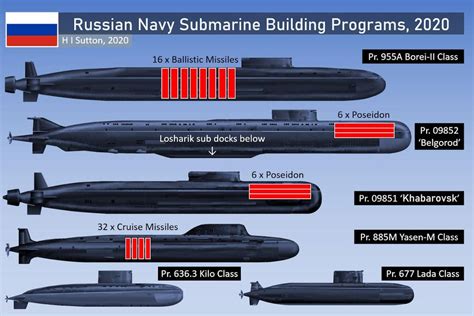
Russia’s Latest Submarines: Names & Capabilities\n\n
Russia’s new submarines
represent a truly significant leap in the nation’s naval prowess, showcasing a relentless pursuit of
modernization
and
strategic deterrence
that commands global attention. For those of us fascinated by global defense strategies and the intricate world of
underwater capabilities
, delving into these sophisticated vessels is not just interesting, it’s absolutely crucial for understanding contemporary power dynamics. In recent years, Russia has poured immense resources into revitalizing its submarine fleet, a cornerstone of its military doctrine and a key instrument in its ambition to project power across the world’s oceans. This article promises a deep dive into the fascinating, often shadowed, realm of
Russia’s latest submarines
, exploring their intriguing names, the cutting-edge technologies that power them, and the profound strategic implications they carry on the international stage. We’re not just talking about ordinary boats here, guys; we’re talking about technological marvels designed for unparalleled stealth, devastating precision, and immense destructive potential. The Kremlin views its submarine fleet as an absolutely
vital component
of its national security architecture, ensuring it can respond to any perceived threat, maintain a credible second-strike capability in the event of nuclear aggression, and challenge adversaries in various maritime theaters around the globe. This comprehensive look will guide you through the various classes of these underwater behemoths, detailing what makes them tick and why their presence matters so much on the geopolitical chessboard. From the mighty ballistic missile carriers that safeguard national security to the versatile multi-role attack subs that can hunt and strike with precision, and even the silent conventional boats that pose a significant regional threat, each vessel plays a unique and critical role in Russia’s ambitious naval strategy. We’ll meticulously break down the specific names assigned to these vessels, often steeped in rich Russian history and tradition, giving you a better grasp of the cultural significance and the legacy that these formidable machines are intended to uphold. So, buckle up, because we’re about to embark on an exciting journey to explore the depths of Russia’s
underwater might
and unravel the mysteries surrounding its newest, most potent weapons. This deep dive isn’t merely about military hardware specifications; it’s about understanding the complex interplay of technology, strategic imperative, and global power dynamics that increasingly define the modern era of international security. Get ready to gain a valuable perspective on one of the most significant naval developments of our time.\n\n## The Strategic Importance of Russia’s New Submarines\n\nThe deployment of
Russia’s new submarines
isn’t just about adding new vessels to the fleet; it’s a profound statement about the nation’s commitment to maintaining and enhancing its
global naval power
. These underwater assets are absolutely
central
to Russia’s
naval doctrine
, serving multiple critical purposes that underpin its national security strategy. Firstly, they act as a cornerstone of strategic deterrence. The nuclear-powered ballistic missile submarines (SSBNs), particularly the
Borei-A class
, carry intercontinental ballistic missiles (ICBMs) capable of delivering devastating payloads anywhere on Earth. Their stealth and ability to operate undetected in the vast ocean depths provide Russia with a
credible second-strike capability
, ensuring that even if its land-based nuclear forces were neutralized, retaliation would still be possible. This capability is a fundamental pillar of nuclear deterrence, preventing large-scale conflicts by making the cost of aggression unthinkable. Without a robust and modern SSBN fleet, Russia’s strategic posture would be significantly weakened, hence the continuous investment in these highly specialized and incredibly complex machines. Think about it: these aren’t just ships; they’re mobile, undetectable launch platforms that can remain submerged for months, lurking in the shadows, ready to act if absolutely necessary. Their very existence forces potential adversaries to think twice, creating a delicate balance of power that has defined international relations for decades. Beyond deterrence,
Russia’s new submarines
also play a crucial role in
power projection
and
area denial
. The multi-role attack submarines (SSNs), like the
Yasen-M class
, are designed to engage enemy surface ships, submarines, and even land targets with precision-guided cruise missiles. They can protect Russia’s own naval surface groups, interdict enemy shipping lanes, and conduct intelligence-gathering missions. Their stealth allows them to operate in contested waters, posing a significant threat to any adversary and effectively denying them freedom of maneuver. These subs are equipped with advanced sensors and weapon systems, making them formidable predators in the underwater domain. They are vital for asserting Russia’s presence in strategic regions, such as the Arctic, where geopolitical competition is intensifying. The ability to patrol and operate effectively in harsh environments like the Arctic is a testament to their robust design and advanced engineering. Furthermore, the conventional diesel-electric submarines (SSKs), like the
Improved Kilo class
, though smaller, offer exceptional
stealth
in shallower, coastal waters, making them ideal for regional defense, anti-submarine warfare (ASW) training, and export. They are incredibly quiet, often earning them the nickname “black hole” due to their ability to virtually disappear from sonar. This makes them extremely dangerous adversaries in certain operational contexts, capable of ambushing larger, less agile vessels. So, you see, guys, Russia’s investment in its
submarine capabilities
isn’t just about showing off; it’s a calculated, multifaceted strategy to safeguard its interests, project its influence, and ensure its security in a constantly evolving global landscape. The development and deployment of these vessels underscore a clear message: Russia intends to remain a major naval power, capable of operating effectively across the full spectrum of underwater warfare.\n\n## Unveiling the Names: A Dive into Russia’s Latest Fleet\n\nLet’s get into the really cool stuff: the names of these incredible machines!
Russia’s new submarines
aren’t just given numbers; they’re often bestowed with names steeped in national pride, honoring historical figures, cities, or strategic locations. This tradition adds a layer of cultural significance to these formidable warships, transforming them from mere military assets into symbols of Russian heritage and ambition. Understanding these names gives us a glimpse into the nation’s priorities and the legacy it seeks to uphold through its naval power.\n\n### Project 955A Borei-A Class: The Silent Guardians\n\nWhen we talk about
nuclear ballistic missile submarines (SSBNs)
, the
Project 955A Borei-A class
are truly the flagships of
Russia’s strategic deterrence
. These colossal vessels are designed to be virtually undetectable while carrying their devastating payload of Bulava ICBMs. Each submarine in this class is a testament to advanced engineering and strategic importance, and their names reflect this grandeur. The lead ship, the
Knyaz Vladimir
(
Prince Vladimir
), was commissioned in 2020, marking a new era for Russia’s naval power. This name harks back to one of the most significant figures in Russian history, Prince Vladimir the Great, who is credited with Christianizing Rus’. Following in its wake are equally impressive vessels. The
Knyaz Oleg
(
Prince Oleg
), named after the Varangian prince who ruled Kyiv in the 9th and 10th centuries, joined the fleet in 2021. Then came the
Knyaz Suvorov
(
Prince Suvorov
), commissioned in 2022, honoring Alexander Suvorov, one of Russia’s greatest military commanders. These names are not chosen lightly; they evoke a sense of historical might and national destiny. Next up was the
Emperor Alexander III
, which joined the fleet in 2023, paying homage to the penultimate Emperor of Russia. And looking to the future, we have the
Knyaz Pozharsky
(
Prince Pozharsky
), currently undergoing trials, named after Dmitry Pozharsky, a national hero who helped liberate Russia from Polish-Lithuanian occupation in the early 17th century. These five submarines, with more planned, form the backbone of Russia’s
nuclear submarine fleet
, ensuring its ability to maintain a credible second-strike capability. They are incredibly sophisticated, incorporating cutting-edge
stealth technology
to minimize their acoustic signature, making them exceedingly difficult for adversaries to detect and track. Their design focuses on survivability and the ability to operate deep within hostile waters, ensuring that Russia’s nuclear deterrent remains robust and resilient. Guys, these submarines are absolutely crucial for Russia’s strategic balance, representing the pinnacle of its
underwater capabilities
and serving as a constant reminder of its formidable naval might. Their long endurance and ability to carry up to 16 Bulava SLBMs, each capable of carrying multiple nuclear warheads, make them one of the most potent weapons systems on the planet. The continuous development and commissioning of these
Borei-A class submarines
highlight Russia’s unwavering commitment to modernizing its strategic forces, ensuring its security and influence on the global stage for decades to come.\n\n### Project 885M Yasen-M Class: The Multi-Role Predators\n\nMoving on from strategic deterrents, let’s talk about the
Project 885M Yasen-M class
, often referred to as
nuclear-powered attack submarines (SSNs)
. These beasts are the versatile hunters of
Russia’s new submarines
, designed for a wide array of missions, from anti-ship and anti-submarine warfare to land-attack and intelligence gathering. They are truly multi-role platforms, and their names, often derived from major Russian cities, reflect their national importance and broad operational scope. The lead ship of the improved Yasen-M series, the
Kazan
, entered service in 2021. This name, representing one of Russia’s largest and most significant cities, emphasizes its role as a frontrunner in a new generation of
attack submarines
. Following the
Kazan
closely, the
Novosibirsk
was commissioned in 2021, named after the sprawling Siberian city, highlighting Russia’s ambition to project power across its vast territories and beyond. The
Krasnoyarsk
, named after another major Siberian city, joined the fleet in 2022, further bolstering Russia’s Pacific fleet capabilities. Next in line was the
Arkhangelsk
, commissioned in 2023, named after the historic port city in Northern Russia, underscoring its relevance in Arctic operations. And with more on the way, the
Perm
is currently undergoing trials, named after the city in the Ural Mountains, signifying the widespread geographical pride embedded in these vessels. These
Yasen-M class submarines
are renowned for their advanced stealth features, significantly reduced acoustic signature, and formidable weapon systems. They are equipped with universal vertical launch systems (VLS) that can fire a variety of sophisticated missiles, including the long-range
Kalibr cruise missiles
and the terrifying
Zircon hypersonic missiles
. This makes them a serious threat to both surface fleets and land-based targets, providing Russia with unparalleled offensive capabilities from beneath the waves. Guys, these aren’t just about launching torpedoes; they’re about delivering precision strikes from a hidden platform, changing the game in naval warfare. Their ability to operate at deep depths and maintain high speeds while remaining remarkably quiet makes them incredibly difficult to counter. The
Yasen-M class
represents Russia’s commitment to developing a balanced and potent submarine fleet, capable of both strategic and tactical missions. These
nuclear-powered attack submarines
are a clear indicator of Russia’s intent to maintain a robust and adaptable presence in all major maritime theaters, securing its strategic interests and projecting its influence far beyond its borders. The continued integration of such powerful and flexible assets into
Russia’s naval doctrine
significantly enhances its ability to respond to a diverse range of modern threats.\n\n### Project 636.3 Improved Kilo Class: The Stealthy Conventional Threat\n\nWhile the nuclear behemoths get most of the headlines, let’s not forget the workhorses of
Russia’s new submarines
– the
Project 636.3 Improved Kilo class
, also known as
Varshavyanka class
submarines. These
diesel-electric submarines (SSKs)
might not be nuclear-powered, but they are incredibly stealthy and potent, especially in coastal waters and enclosed seas. Often dubbed “black holes” due to their exceptionally low noise levels, they are a nightmare for any adversary trying to track them. The Improved Kilos are primarily intended for regional operations and are a favorite for export, but Russia also operates a significant number of them in its own fleet, particularly in the Black Sea and Baltic Sea. They are an integral part of
Russia’s naval modernization
efforts. The Black Sea Fleet, for instance, has seen a steady stream of these powerful yet compact vessels. Recent additions include the
Magadan
, commissioned in 2021, named after a port city in Russia’s Far East, though it operates primarily in the Pacific. More recently, the
Ufa
, named after a city in the Ural Mountains, joined the Pacific Fleet in 2022. The
Mozhaisk
, named after a historic town west of Moscow, followed in 2023. And currently, the
Yakutsk
, named after a major city in Siberia, is undergoing trials. These
Improved Kilo class submarines
are equipped with six 533mm torpedo tubes capable of launching torpedoes, mines, and, significantly,
Kalibr cruise missiles
. This missile capability transforms them from purely anti-ship/anti-submarine platforms into serious land-attack threats, a surprising punch for a conventional submarine. Their ability to carry guided missiles gives them a reach and precision that belies their conventional propulsion. Guys, don’t underestimate these “non-nuclear” subs; they are incredibly effective for littoral warfare, coastal defense, and intelligence gathering. Their quiet operation makes them extremely dangerous in shallower, acoustically complex environments, where larger nuclear submarines might struggle to remain undetected. The relatively lower cost and ease of maintenance compared to nuclear submarines also make them a highly practical choice for augmenting
Russia’s naval power
in specific operational zones. The continuous production and integration of these
Varshavyanka class
submarines underscore Russia’s pragmatic approach to naval development, ensuring it has a diverse and capable fleet suitable for a wide range of operational requirements, from deep ocean patrols to challenging coastal defense scenarios. These vessels are a testament to the fact that cutting-edge capabilities aren’t always about nuclear propulsion; sometimes, it’s about unparalleled stealth and versatile firepower in a compact package.\n\n## Advanced Technologies Powering Russia’s Underwater Might\n\nThe formidable capabilities of
Russia’s new submarines
are not just a result of their impressive names or sheer size; they are fundamentally driven by an intense focus on
advanced technologies
. These cutting-edge innovations are what truly make these vessels some of the most sophisticated and dangerous underwater platforms in the world. From the way they move through the water to the devastating weapons they carry, every aspect is designed for maximum effectiveness and survivability. It’s truly fascinating to see how far naval engineering has come, and Russia is certainly pushing the boundaries. We’re talking about breakthroughs that give these submarines an edge in the complex and unforgiving underwater battlespace.\n\n### Stealth and Acoustic Signature Reduction\n\nWhen we talk about
Russia’s new submarines
, especially the
Borei-A
and
Yasen-M class
, one of the most critical aspects of their design is
stealth technology
. In the realm of underwater warfare, being undetected is paramount, and Russia has invested heavily in minimizing the
acoustic signature
of its latest fleet. This isn’t just about making them “quiet”; it’s about making them virtually invisible to enemy sonars, which are the primary means of detecting submarines. Engineers employ a myriad of techniques to achieve this remarkable level of
acoustic signature reduction
. This starts with the very shape of the hull, designed to reduce hydrodynamic noise. Special anechoic tiles cover the exterior, absorbing active sonar pulses and dampening internal machinery noise, preventing it from radiating outwards. Think of these tiles like soundproofing for a concert hall, but on a massive, underwater scale. The internal machinery, including the main propulsion turbines and pumps, is mounted on raft systems with sophisticated shock absorbers, isolating vibrations from the hull. This meticulous attention to detail ensures that even the hum of vital systems is attenuated to an absolute minimum. Furthermore, advanced propulsor designs, such as pump-jets on the
Yasen-M class
, replace traditional propellers, significantly reducing cavitation noise, which is a major source of sound for submarines operating at speed. These design choices and material science innovations are what make
Russia’s new submarines
incredibly
quiet
and exceptionally difficult to track, earning them the moniker of “silent hunters.” The ability of these submarines to operate without detection in vast ocean expanses gives them a massive tactical advantage, allowing them to approach targets, deploy weapons, or conduct surveillance with a high degree of impunity. For naval planners, the thought of an undetectable adversary lurking beneath the waves is a constant source of concern, highlighting the strategic importance of these
stealthy submarines
. The continuous refinement of these
acoustic signature reduction
techniques remains a top priority for Russian naval designers, ensuring that their submarines maintain their edge in the ever-evolving cat-and-mouse game of underwater warfare. It’s a testament to incredible engineering that something so large can be so quiet!\n\n### Weapon Systems and Payload Capabilities\n\nBeyond their stealth, the true power of
Russia’s new submarines
lies in their sophisticated
weapon systems
and diverse
payload capabilities
. These vessels are not just platforms for covert operations; they are mobile arsenals capable of delivering devastating firepower across vast distances. When we talk about the
Borei-A class
, their primary role is strategic nuclear deterrence, and they carry up to 16 Bulava submarine-launched ballistic missiles (SLBMs), each capable of carrying multiple independently targetable re-entry vehicles (MIRVs) with nuclear warheads. This gives them an unmatched destructive potential, solidifying Russia’s position as a major nuclear power. Moving to the
Yasen-M class
, these
nuclear-powered attack submarines
are incredibly versatile. They are equipped with universal vertical launch systems (VLS) that can fire a variety of precision-guided missiles. The most prominent among these are the
Kalibr cruise missiles
, a family of land-attack, anti-ship, and anti-submarine missiles that have demonstrated impressive accuracy and range in recent conflicts. Imagine a submarine launching a missile that can strike a target hundreds or even thousands of kilometers away with pinpoint precision – that’s what the Kalibr brings to the table. Even more concerning for potential adversaries are the
Zircon hypersonic missiles
, which Russia is actively integrating into its
Yasen-M class
and other platforms. These missiles travel at speeds exceeding Mach 8 or 9, making them virtually impossible for current air defense systems to intercept. The deployment of
Zircon hypersonic missiles
on submarines represents a significant leap in naval offensive capabilities, allowing Russia to deliver extremely rapid and devastating strikes against high-value targets. Furthermore, all classes of
Russia’s new submarines
are equipped with traditional
torpedo tubes
capable of firing heavy torpedoes (like the universal USET-80), as well as deploying mines and even uncrewed underwater vehicles (UUVs) for reconnaissance or other specialized missions. The
Improved Kilo class
, despite being conventional, also boasts
Kalibr cruise missile
capability, making them surprisingly potent for their size. This diverse array of
anti-ship missiles
, land-attack cruise missiles, and advanced torpedoes ensures that
Russia’s submarine fleet
can tackle virtually any naval or coastal threat. Guys, the sheer variety and destructive power packed into these underwater vessels are truly mind-boggling, showcasing Russia’s determination to maintain a cutting-edge arsenal that can project power and secure its interests in any maritime domain.\n\n## Global Implications and Geopolitical Impact\n\nThe ongoing
modernization of Russia’s new submarines
has profound
global implications
and a significant
geopolitical impact
, reshaping naval balances and influencing international relations. When we talk about
Russia’s naval power
, particularly its growing underwater capabilities, it’s not just a matter for Moscow; it resonates across the globe, especially among major naval powers and strategic competitors. This massive investment in its submarine fleet is seen by many as a clear signal of Russia’s intent to reassert itself as a dominant maritime force, challenging the status quo and potentially escalating tensions in key strategic areas.\n\n### Shifting Naval Balances\n\nThe rapid development and deployment of
Russia’s new submarines
, including the
Borei-A
,
Yasen-M
, and
Improved Kilo classes
, are undeniably
shifting naval balances
worldwide. For
NATO concerns
, the increasing sophistication and stealth of
Russia’s submarine fleet
pose a formidable challenge. NATO navies, particularly those of the United States and the United Kingdom, have long held a qualitative edge in anti-submarine warfare (ASW), but
Russia’s modernization efforts
are narrowing that gap. The ability of
Yasen-M class
submarines to carry
Zircon hypersonic missiles
and
Kalibr cruise missiles
means they can hold large swathes of the ocean and coastal regions at risk, forcing NATO to re-evaluate its defensive strategies and invest more heavily in ASW capabilities. The operational areas of these submarines are also expanding, with increased Russian submarine activity observed in the Atlantic, Mediterranean, and crucially, the Arctic. The
Arctic presence
of
Russia’s submarine fleet
is of particular concern. As climate change opens up new shipping lanes and access to valuable resources in the Arctic, Russia views this region as a strategic priority. Its specialized submarines, designed to operate in harsh Arctic conditions, give it a significant advantage in asserting control and protecting its northern borders. This has led to increased military exercises and patrols by both Russia and NATO in the high north, raising the potential for encounters. Furthermore, the deployment of quiet
Improved Kilo class submarines
in enclosed seas like the Black Sea and Baltic Sea creates “bastions” where they can operate with relative impunity, posing a threat to littoral states and NATO allies in those regions. This forces a redistribution of naval assets and a heightened state of alert. Guys, this isn’t just about who has the most ships; it’s about who has the most capable and stealthy platforms that can deny access, project power, and maintain a credible threat in an underwater domain that is increasingly opaque. The strategic implications extend beyond direct military confrontation, influencing intelligence gathering, naval doctrine development, and even arms control discussions. The mere existence of such advanced
Russia’s new submarines
means that any major naval power must now contend with a more capable and technologically advanced Russian underwater force, necessitating significant adjustments in global naval planning and expenditure. This ongoing naval arms race, particularly in the submarine domain, will undoubtedly continue to be a defining feature of international security for years to come.\n\n## Conclusion\n\nAlright, guys, let’s wrap this up. It’s pretty clear that
Russia’s new submarines
are a huge deal, not just for Russia, but for the entire global geopolitical landscape. We’ve journeyed through the depths of
Russia’s naval power
, exploring the specific names of these formidable vessels, from the historically significant
Knyaz Vladimir
of the
Borei-A class
to the city-named
Kazan
of the
Yasen-M class
and the stealthy
Magadan
of the
Improved Kilo class
. These aren’t just names; they are symbols of national pride and strategic intent. The
modernization efforts
undertaken by Russia in developing these cutting-edge underwater platforms are truly remarkable, showcasing an unwavering commitment to enhancing its
underwater capabilities
. We’ve seen how
stealth technology
and
acoustic signature reduction
make them incredibly difficult to detect, turning them into silent hunters of the deep. Moreover, their
weapon systems
, including the devastating
Kalibr cruise missiles
and the game-changing
Zircon hypersonic missiles
, provide unparalleled offensive punch, allowing them to engage targets far and wide with precision and speed. The
strategic importance
of these submarines cannot be overstated. They serve as a cornerstone of
Russia’s strategic deterrence
, ensuring a credible second-strike capability with their nuclear payloads. They also act as multi-role predators, capable of dominating maritime theaters, protecting naval flanks, and conducting sophisticated land attacks. The
global implications
of this burgeoning
Russia’s submarine fleet
are far-reaching. They are actively
shifting naval balances
, leading to increased
NATO concerns
and a heightened focus on anti-submarine warfare. The growing
Arctic presence
of these Russian subs further complicates an already sensitive geopolitical region, highlighting a new arena for potential competition. Ultimately, the continuous development and deployment of
Russia’s new submarines
underscore a clear message from Moscow: it intends to remain a formidable global naval power, capable of projecting influence and protecting its interests across the world’s oceans. These vessels are more than just military hardware; they are strategic assets that fundamentally alter the calculus of international security. As we look to the future, the ongoing evolution of
Russia’s submarine fleet
will undoubtedly continue to be a defining factor in shaping global maritime strategy and power dynamics. Keep an eye on the deep, because that’s where some of the most significant shifts are happening!
