Saudi Coalition: Key Facts and Global Impact Hey guys, have you ever heard about the
Saudi Coalition
and wondered what it’s all about? It’s a pretty big deal in the Middle East, and its actions have global implications, so understanding it is key to grasping current events. In this comprehensive guide, we’re going to dive deep into the
Saudi Coalition
, exploring its origins, its main players, and its most significant operations, particularly in the ongoing conflict in Yemen. We’ll also look at how the international community views its role and what the future might hold for this powerful alliance. Our goal here isn’t just to list facts, but to really help you
understand
the complexities and human impact behind the headlines. So, buckle up, because we’re about to explore one of the most impactful geopolitical forces of our time, breaking down the often-dense information into something digestible and meaningful. We’ll cover everything from its formation to its long-term legacy, ensuring you walk away with a solid grasp of this critical subject. # What is the Saudi Coalition? A Deep Dive into its Formation and Objectives Okay, first things first, let’s talk about the
Saudi Coalition
itself. Officially known as the Coalition to Restore Legitimacy in Yemen, this alliance was
formed in March 2015
by Saudi Arabia. Its primary, stated objective was to intervene in the Yemeni Civil War, which had seen the Houthi movement (also known as Ansar Allah) take control of the capital, Sana’a, and advance on Aden, forcing the internationally recognized government of President Abdrabbuh Mansur Hadi to flee. The
Saudi Coalition
stepped in at Hadi’s request, aiming to
restore his government’s authority
and counter what it perceived as Iranian influence in Yemen. This wasn’t just a simple military response; it was a complex geopolitical move, designed to assert Saudi Arabia’s regional leadership and protect its strategic interests against rising threats. The coalition’s formation was a direct response to a rapidly deteriorating security situation on Saudi Arabia’s southern border, a situation that many viewed as a critical threat to
regional stability
. The intervention was initially framed as a short, decisive campaign, but as we know, the conflict has proven to be anything but. The
objectives
of the Saudi Coalition were quite clear from the outset: prevent a Houthi takeover of Yemen, which they saw as backed by their rival Iran; restore the legitimate government; and ensure the stability of the region, particularly the vital shipping lanes through the Bab el-Mandeb strait. They believed that a Houthi-controlled Yemen would give Iran a significant foothold on the Arabian Peninsula, directly threatening Saudi security and disrupting the geopolitical balance of power. The coalition quickly launched “Operation Decisive Storm,” involving air strikes against Houthi targets across Yemen, followed by “Operation Restoring Hope,” which focused more on humanitarian aid and political solutions, though military operations continued. This marked a significant shift in Saudi foreign policy, demonstrating a more assertive and interventionist approach to regional challenges. The coalition’s creation also aimed to send a strong message about Saudi Arabia’s willingness to act decisively to protect its interests and those of its allies.
Understanding the genesis
of the
Saudi Coalition
is crucial, guys, because it sets the stage for everything that has unfolded since. The stated goals, while clear on paper, have faced immense challenges on the ground, leading to a protracted and devastating conflict that continues to this day. The initial hope for a quick resolution gave way to a grinding war, highlighting the complexities and unforeseen consequences of military interventions in deeply fractured nations. # The Core Members and Key Players: Who’s Involved? When we talk about the
Saudi Coalition
, it’s not just Saudi Arabia acting alone, you know? This alliance brought together several nations, primarily from the Gulf Cooperation Council (GCC) and other Arab states, to form a multi-national force. The
core members
have always included Saudi Arabia, which naturally plays the leading role, providing the bulk of the airpower, logistical support, and financial backing. Following closely are the United Arab Emirates (UAE), which initially contributed significant ground forces and air assets, playing a crucial role in operations around Aden and the southern provinces. Other
key players
have included Bahrain, Kuwait, and Qatar (though Qatar’s involvement significantly diminished after the 2017 GCC diplomatic crisis), providing fighter jets and financial contributions. Egypt and Jordan also contributed naval and air forces, respectively, emphasizing the broad regional support for the coalition’s stated aims. Even Sudan, an often-overlooked but significant contributor, sent thousands of ground troops, reflecting its complex alignment in regional power dynamics. Senegal, Morocco, and Pakistan were also initially invited or considered for participation, with some offering political support, though their direct military involvement varied or was ultimately limited. The
diversity of its membership
underscored the coalition’s ambition to present a unified Arab front against perceived threats. Each member nation had its own strategic reasons for joining, ranging from shared security concerns about Iranian influence, solidarity with Saudi Arabia, to economic and political considerations. For example, the UAE’s involvement was deeply tied to its own regional security agenda and counter-terrorism efforts. The
leadership structure
of the Saudi Coalition is predominantly centered in Riyadh, with Saudi military command overseeing the operational strategies. However, coordination among the various national contingents, each with its own military doctrines and equipment, has been a complex undertaking.
Understanding who’s involved
helps us see the broader geopolitical landscape the coalition operates within. It’s not a monolithic entity, but a collection of sovereign states pursuing shared, though sometimes diverging, interests under a unified banner. The commitment of these nations has been vital to the coalition’s operations, influencing everything from the scale of air campaigns to the presence of ground forces. This collaboration, while robust, also presents challenges in terms of unified command and strategic alignment, especially as the conflict has dragged on and objectives have evolved. The
Saudi Coalition’s strength
lies in this collective power, allowing it to project significant military force and diplomatic weight in the region. ### The Evolving Role of the UAE in the Coalition Within the
Saudi Coalition
, the United Arab Emirates deserves a special mention, guys, because its role has
evolved significantly
over time. Initially, the UAE was a very active and prominent partner, deploying substantial ground troops and leading key offensives, particularly in the south of Yemen. Their forces were instrumental in retaking Aden from Houthi control and supporting local Yemeni factions. However, in recent years, the UAE has
largely scaled back its direct military presence
, shifting its focus from active combat operations to more targeted counter-terrorism efforts and supporting specific Yemeni proxy forces, primarily the Southern Transitional Council (STC). This strategic pivot reflects the UAE’s desire to reduce its direct exposure to the war’s protracted nature and its increasing focus on specific national security interests, distinct from Saudi Arabia’s broader objectives. This
recalibration
has had significant implications for the coalition’s overall strategy and ground operations, demonstrating that even within an alliance, national interests can lead to differing approaches. # The Yemen Conflict: A Central Focus of the Saudi Coalition’s Operations Alright, let’s get down to the really heavy stuff, guys: the
Yemen conflict
, which has been the central theatre for the
Saudi Coalition’s
operations. When the coalition intervened in March 2015, the situation in Yemen was already dire, but the scale of the conflict escalated dramatically with the internationalized intervention. The coalition’s primary military strategy has relied heavily on
air superiority
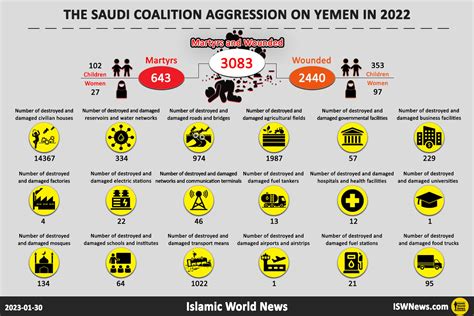
, conducting thousands of airstrikes against Houthi targets. These targets have included military installations, weapon depots, and frontline positions, but tragically, these strikes have also led to significant civilian casualties and the destruction of vital infrastructure, including hospitals, schools, markets, and even wedding parties. This aspect of the war has drawn immense international criticism and raised serious concerns about violations of international humanitarian law. The conflict isn’t just a military one; it’s a profound
humanitarian crisis
. Yemen, already one of the poorest countries in the Arab world, has been pushed to the brink of famine, with millions displaced, facing acute food insecurity, and lacking access to basic services like clean water and healthcare. The coalition’s naval and air blockades, while intended to prevent weapons from reaching the Houthi rebels, have also severely restricted the flow of essential goods, including food, medicine, and fuel, exacerbating the humanitarian catastrophe.
Understanding the devastating impact
on ordinary Yemenis is crucial here; it’s a side of the conflict that often gets overshadowed by geopolitical analysis. The
Saudi Coalition’s
involvement has aimed to push back the Houthi advances, reclaim territory, and support the forces loyal to the Hadi government. They’ve also provided significant humanitarian aid themselves, attempting to mitigate some of the suffering, but the scale of the crisis often overwhelms these efforts. The fight for key strategic locations, such as Hodeidah port, a crucial entry point for humanitarian aid and commercial goods, has been particularly fierce and contentious. The coalition views the Houthi movement as a proxy for Iran, asserting that Iran provides them with weapons and technical expertise, thereby threatening regional stability. This narrative frames the conflict not just as a civil war, but as a proxy battle in the broader Saudi-Iran rivalry. The
Yemen conflict
is incredibly complex, involving multiple Yemeni factions, regional powers, and international actors, each with their own agendas and allegiances. The
Saudi Coalition’s
actions, while intended to achieve its strategic objectives, have unfortunately contributed to one of the world’s worst humanitarian disasters, making it a critical area of focus for global human rights organizations and international diplomacy. It’s a stark reminder of the often-unintended and far-reaching consequences of armed intervention, especially in already fragile states. # Global Reactions and International Perspectives: Scrutiny and Support When it comes to the
Saudi Coalition
, guys, the
global reactions
have been a mixed bag, to say the least. While the coalition has received
support
from some allies, particularly the United States and the United Kingdom, who have provided logistical, intelligence, and arms support, it has also faced intense
international scrutiny
and widespread criticism. The primary source of this criticism stems from the devastating humanitarian impact of the conflict in Yemen. International human rights organizations, the United Nations, and various aid agencies have consistently raised alarms about the high number of civilian casualties resulting from coalition airstrikes and the severe restrictions on humanitarian access due to blockades. Allegations of
war crimes
and violations of international humanitarian law have been leveled against the coalition, prompting calls for independent investigations and accountability. Reports detailing attacks on civilian infrastructure, including schools, hospitals, and markets, have painted a grim picture of the war’s toll. This has led to significant pressure on countries supplying arms to Saudi Arabia, with many advocating for an
arms embargo
to prevent further civilian harm. Countries like Germany and others have indeed halted arms sales at various points, reflecting the growing discomfort with the humanitarian situation. The
international community’s perspective
on the
Saudi Coalition
is deeply divided. On one hand, supporters emphasize the coalition’s stated goal of restoring a legitimate government and countering perceived Iranian expansionism, viewing its actions as necessary for regional security. They often highlight Saudi Arabia’s right to defend its borders and interests. On the other hand, critics argue that the coalition’s military strategy has been disproportionate, leading to unacceptable levels of civilian suffering, and that a military solution is simply not viable for Yemen’s deeply entrenched political problems. The
United Nations
has played a crucial role, tirelessly working to mediate peace talks and provide humanitarian assistance, while also regularly condemning all parties for violations of international law. Discussions in the UN Security Council have frequently addressed the Yemen crisis, with resolutions calling for ceasefires and unhindered humanitarian access. The reputational damage to the coalition members, particularly Saudi Arabia and the UAE, has been substantial, impacting their diplomatic relations and public image globally. This intense
scrutiny
highlights the complex ethical and legal dilemmas inherent in modern warfare, especially when involving external powers in internal conflicts.
Understanding these diverse global reactions
is essential for a complete picture of the
Saudi Coalition’s
standing on the world stage, showcasing the delicate balance between geopolitical interests and humanitarian imperatives. # The Future of the Saudi Coalition: Challenges, Diplomacy, and Lasting Impact So, what does the
future hold
for the
Saudi Coalition
, guys? This is a question with no easy answers, as the conflict in Yemen, and the broader regional dynamics, remain incredibly fluid. One of the most significant
challenges
facing the coalition is the search for a sustainable peace settlement in Yemen. After years of military intervention, it’s clear that a purely military solution is elusive, and the focus is increasingly shifting towards
diplomacy and political solutions
. Recent developments, including Saudi Arabia’s direct talks with the Houthi movement and the broader rapprochement with Iran, signal a potential turning point. These diplomatic efforts, often facilitated by international mediators, aim to establish a lasting ceasefire, open channels for dialogue between Yemeni factions, and ultimately lead to a comprehensive political agreement that can end the war. The coalition must navigate complex internal Yemeni politics, including the differing interests of various anti-Houthi factions, which sometimes clash with each other as much as with the Houthis. Another major challenge is managing the
humanitarian aftermath
of the conflict. Even if the fighting stops, Yemen will require massive international support for reconstruction, humanitarian aid, and long-term development to recover from years of devastation. The
lasting impact
of the
Saudi Coalition’s
involvement will undoubtedly be felt for decades. It has significantly altered the geopolitical landscape of the Arabian Peninsula, demonstrating Saudi Arabia’s willingness to project power and shaping its relationships with regional rivals and international allies. The experience has also highlighted the complexities and high costs of regional interventions, prompting a reassessment of strategies among coalition members. The
future of regional stability
will depend heavily on whether the current diplomatic overtures can translate into tangible peace on the ground. This includes addressing underlying issues like Iranian influence (as perceived by Saudi Arabia) and ensuring the security of international shipping lanes. The coalition’s long-term legacy will be judged not just by its initial objectives, but by its ultimate success in contributing to a stable and peaceful Yemen, and by how effectively it transitions from military action to diplomatic engagement. For all parties involved, the path forward is fraught with difficulties, requiring immense political will, compromise, and a genuine commitment to alleviating the suffering of the Yemeni people.
Understanding these future challenges
and the potential for a diplomatic resolution offers a glimpse into what might come next for this powerful, yet controversial, alliance. The ongoing shifts in global and regional power dynamics will also play a crucial role in shaping the final chapters of the
Saudi Coalition’s
story.
