WhatsApp Web JS & NPM: Your Ultimate Guide
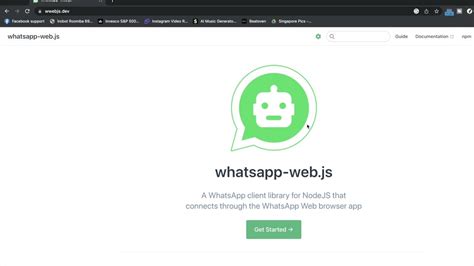
WhatsApp Web JS & NPM: Your Ultimate Guide
Hey guys! Ever wondered how to dive into the world of WhatsApp Web using JavaScript and NPM ? Well, you’re in luck! This guide will break down everything you need to know, from the basics to some cool advanced stuff. We’re going to explore how you can leverage the power of JavaScript and the convenience of NPM to interact with WhatsApp Web , giving you the tools to create some awesome projects. Whether you’re a seasoned developer or just starting out, this is the perfect place to start your journey. Get ready to explore the possibilities and create your own amazing WhatsApp-related projects.
Table of Contents
- Setting Up Your Development Environment for WhatsApp Web JS
- Installing Necessary Packages
- Diving into WhatsApp Web JS Libraries
- Core Functionalities of Libraries
- Writing Your First WhatsApp Web JS Script
- Advanced Techniques and Best Practices
- Security Considerations
- Troubleshooting Common Issues
- Debugging Techniques
- Conclusion: Your WhatsApp Web JS Journey
So, why is this exciting? Well, imagine building bots, automating tasks, or even creating custom interfaces for WhatsApp Web . It’s all within reach, and we’ll show you how. We’ll start with the fundamentals, making sure you grasp the essential concepts before moving on to more complex topics. Throughout this guide, we’ll provide practical examples, code snippets, and helpful tips to ensure you understand everything. We’ll also cover essential topics such as setting up your development environment, understanding the key libraries, and working with the WhatsApp Web interface. Get ready to unlock the full potential of WhatsApp Web and take your projects to the next level. Let’s get started!
Setting Up Your Development Environment for WhatsApp Web JS
Alright, first things first: let’s get your development environment ready for action. To work with
WhatsApp Web
using
JavaScript
and
NPM
, you’ll need a few key tools and a basic understanding of how things work. Don’t worry, it’s not as scary as it sounds. Here’s a breakdown of what you’ll need and how to set it up. First, you’ll need to install Node.js and npm (Node Package Manager) on your computer. Node.js is a JavaScript runtime environment that allows you to run JavaScript code outside of a web browser, and npm is a package manager that helps you install and manage JavaScript libraries and dependencies. You can download the latest version of Node.js from the official website (
https://nodejs.org/
). Installing Node.js will also install npm automatically. Once Node.js and npm are installed, you can verify the installation by opening your terminal or command prompt and typing
node -v
and
npm -v
. This should display the installed versions of Node.js and npm, respectively. Next, you’ll need a code editor. There are many great options out there, but some popular choices include Visual Studio Code, Sublime Text, and Atom. Choose the one that you’re most comfortable with. Install your preferred code editor and get familiar with its features, such as syntax highlighting, code completion, and debugging tools. This will make your development process much smoother. Once you have Node.js, npm, and a code editor set up, you’re ready to start using them to work with
WhatsApp Web
.
Before you start coding, it is also important to understand the concept of a project. In this case, you will use npm to create a new project. You can do this by creating a new directory for your project and then running
npm init
in the terminal. This command will guide you through the process of creating a
package.json
file, which will contain information about your project, such as its name, version, and dependencies. You’ll be prompted to provide some information, but you can usually accept the defaults for now. This will allow you to start adding the necessary dependencies for your project. With your environment all set up, you can now start exploring the world of
WhatsApp Web
with
JavaScript
and
NPM
. Let’s keep moving forward!
Installing Necessary Packages
Okay, so your environment is set up. Now, it’s time to install some essential packages. These packages are like your toolbox, giving you the necessary tools to interact with
WhatsApp Web
. We will use
npm
to install these packages. The most important package is often a library that allows you to interact with
WhatsApp Web
. To install a package, you’ll typically use the
npm install
command followed by the package name. In your terminal, navigate to your project directory and run the command
npm install <package-name>
. For example,
npm install whatsapp-web.js
. Make sure to install the correct package, because the name can vary. The command will download the package and its dependencies, and add them to your project’s
node_modules
directory and also will add the package to the
package.json
file. The package may need to be initialized once installed, so read the package documentation for further instructions. You might also want to install other packages depending on your project. Some packages help with managing your project, while others could add features. In addition to the main library, you might need to install other packages depending on your project’s specific needs. For example, you might need packages for handling HTTP requests, working with databases, or parsing data. You can find these packages on npm’s website (
https://www.npmjs.com/
) by searching for keywords related to your project’s requirements. Keep an eye on the package documentation to learn how to use each package and what features they offer. You may also need to install the TypeScript package if you are using TypeScript. Once you’ve installed all the necessary packages, you’ll be able to import them into your JavaScript files and start using their functions and features. Let’s make sure our package manager is up to date and we are good to go!
Diving into WhatsApp Web JS Libraries
Alright, let’s get into the good stuff:
WhatsApp Web
JS
libraries. These are your secret weapons for interacting with
WhatsApp Web
, and they make the whole process much easier. There are a few key libraries out there that will help you work with
WhatsApp Web
effectively. First, you’ll have to choose a library. It is usually a good idea to check out the documentation and the features that the library offers, before installing it. These libraries provide you with the tools to connect to
WhatsApp Web
, send messages, receive messages, and automate various actions. They wrap around the internal mechanisms of
WhatsApp Web
, making them accessible to your
JavaScript
code. Now, let’s talk about the main library for interacting with
WhatsApp Web
:
whatsapp-web.js
. This is a popular library that simplifies the process of interacting with
WhatsApp Web
through
JavaScript
. Here is how to install the library with NPM
npm install whatsapp-web.js
.
Another library that you may want to check out is
@wppconnect/wa-js
. This is a library created by the WPPConnect project. It also provides a way to interact with
WhatsApp Web
. Check the documentation, and install the library with
npm install @wppconnect/wa-js
. Then, there are some optional libraries that can make your development life easier. For example, if you want to handle user input more efficiently, you might look into a command parser library or a library for creating interactive menus. Some libraries will also help you with advanced features. You might also want to use the debugging tools provided by your code editor or by the libraries themselves. Debugging tools will show you the exact values of variables, so you can track down the source of issues. Always check the documentation for any libraries you’re using. These libraries are constantly evolving, and the documentation will give you the most up-to-date information on how to use them effectively.
Core Functionalities of Libraries
Once you have installed the libraries, it is time to understand the core functionalities they provide. These functionalities will be the building blocks of your projects, and they will allow you to interact with WhatsApp Web in various ways. Let’s start with authentication. You’ll need to log in to your WhatsApp Web account to access your messages and contacts. The libraries often provide methods for this, such as generating a QR code that you can scan with your phone to authenticate. Next, sending and receiving messages will be key. Your libraries should have functions for sending text messages, media files (images, videos, etc.), and other types of content. They will also provide events or methods for listening for incoming messages and processing them. The next step is managing contacts and groups. Libraries will provide functions to get contact information, create and manage groups, and add or remove participants. You may also want to use the ability to read and manage chats. This includes the ability to read chat history, clear chats, and archive chats. You can also automate tasks. Once you have the basics down, you can start automating tasks. This might include sending automated replies, scheduling messages, or creating bots that interact with users.
Remember to consult the documentation of the libraries you’re using for detailed information on these functionalities and how to use them. The libraries also have functionalities for handling media, such as images, videos, and documents. With these core functionalities at your disposal, you can start building a wide range of projects, from simple bots to complex automation tools. Now, let’s get to some code!
Writing Your First WhatsApp Web JS Script
Alright, let’s get our hands dirty and write your first
WhatsApp Web
JS
script. This is where the magic really starts to happen! Here is a simple example to get you started. First, you need to import the library you chose to use. For example, if you chose
whatsapp-web.js
, you would import it like this:
const qrcode = require('qrcode-terminal');
and
const { Client, LocalAuth } = require('whatsapp-web.js');
. You can also include options in the
Client
function:
const client = new Client({ authStrategy: new LocalAuth() });
. The
LocalAuth
option stores the session information, which allows your bot to be used without having to scan the QR code every time. If you do not include this, you will have to scan a QR code every time. Next, you need to initialize the client and handle events. An event is an action or occurrence that happens. You will have to handle events like
qr
,
ready
and
message
. The
qr
event is triggered when you need to scan a QR code to authenticate:
client.on('qr', qr => {
 qrcode.generate(qr, {small : true});
 console.log('QR RECEIVED', qr);
});
In this example, the QR code is generated using the
qrcode-terminal
library, and then logged to the console. The
ready
event is triggered when the client is authenticated and ready to use.
client.on('ready', () => {
 console.log('Client is ready!');
});
The
message
event is triggered when a new message is received.
client.on('message', msg => {
 if (msg.body == '!ping') {
 msg.reply('pong');
 }
});
In this example, the code will respond with
pong
if the message body is
!ping
. The
msg.reply()
function is used to send a message back to the sender. Lastly, you need to start the client:
client.initialize();
Now, here is a full example that you can use. Remember to install
qrcode-terminal
and the
whatsapp-web.js
libraries.
const qrcode = require('qrcode-terminal');
const { Client, LocalAuth } = require('whatsapp-web.js');
const client = new Client({ authStrategy: new LocalAuth() });
client.on('qr', qr => {
 qrcode.generate(qr, {small : true});
 console.log('QR RECEIVED', qr);
});
client.on('ready', () => {
 console.log('Client is ready!');
});
client.on('message', msg => {
 if (msg.body == '!ping') {
 msg.reply('pong');
 }
});
client.initialize();
This simple script covers the basics, including authentication, responding to messages, and sending replies. As you experiment with these examples, you’ll start to grasp the potential of interacting with WhatsApp Web through JavaScript and NPM . You can customize the script to create your own unique bots, automation tools, and more. This is just a starting point. Your scripts can do so much more, like sending media, reading chat histories, and interacting with groups. Remember to refer to the library documentation for detailed instructions on the available functions and options. Get ready to have some fun and explore the possibilities! Now, let’s talk about some more advanced concepts.
Advanced Techniques and Best Practices
Alright, let’s take a look at some
advanced techniques
and best practices to help you get the most out of
WhatsApp Web
with
JavaScript
and
NPM
. After all, you’ll want to build robust and efficient projects. Let’s start with error handling. Error handling is critical in any software project. You need to handle potential errors gracefully to prevent your script from crashing. Use
try...catch
blocks to catch exceptions, and log errors to help you troubleshoot any issues. For example, if you try to send a message and it fails, you can catch the error and log a message to the console. This will help you identify the problem and fix it quickly.
Next, focus on modularity. This involves breaking your code into smaller, reusable functions and modules. This will make your code more organized, easier to maintain, and easier to debug. For example, you can create separate functions for sending messages, handling events, and managing contacts. You can also use modules to organize related functions into logical groups. Modularity makes it easier to update and modify your code. If you make a mistake, you can quickly locate and fix it without affecting other parts of your code. You also need to manage your dependencies. You should keep your packages up to date, and make sure to only include the dependencies that you need. When installing packages, make sure to read the documentation carefully and understand their dependencies. This is where using
npm
becomes very helpful. You can use
npm
to install, update, and manage the packages that your project depends on. Use the
npm update
command to update packages to the latest versions. Regularly updating your packages ensures that you have the latest features and security updates. It is also important to test your code. Testing involves writing code to verify that your script works as expected. You can use testing frameworks like Jest or Mocha to write tests for your code. Testing helps you catch errors early and ensures that your code is reliable.
Security Considerations
Security is another critical consideration, especially when dealing with messaging platforms like WhatsApp Web . Protect your API keys and authentication credentials, and avoid hardcoding sensitive information in your scripts. Store sensitive data in environment variables or configuration files. This will prevent your credentials from being exposed in your code. You can also use encryption to protect sensitive data. The library you chose will probably have built-in security features, such as rate limiting and authentication. Use these features to protect your application from malicious attacks. If you are handling user data, make sure to comply with privacy regulations and protect user data. Lastly, it is a good idea to optimize performance. Write efficient code to minimize resource usage. This can include using asynchronous operations and optimizing your code for performance. Use asynchronous operations to prevent your script from blocking the main thread. This will make your application more responsive and performant. Also, be mindful of the resources your script is consuming. Check for memory leaks and optimize your code for performance.
Troubleshooting Common Issues
It is good to know how to troubleshoot common issues when working with WhatsApp Web with JavaScript and NPM . You’ll likely run into some bumps along the road, but don’t worry, we’ve got you covered. One common issue is related to authentication. Make sure your QR code is scanned correctly, and that your session is valid. Sometimes, the session might expire, and you’ll need to re-authenticate. Double-check your code to ensure that you’re handling the authentication process correctly. Check your network connection. Your application needs a stable internet connection to communicate with WhatsApp Web . Make sure your internet connection is working correctly and that there are no firewalls or network restrictions that might be interfering with your script.
Also, your code might not be compatible with the current version of WhatsApp Web . WhatsApp Web is constantly evolving, and sometimes the changes can break your code. Make sure your library and dependencies are up to date. Keep an eye on the library documentation for any breaking changes or updates. In your code, you might be using the incorrect function calls or parameters. Always refer to the library documentation. Always check the error messages and console logs for clues. Error messages can provide valuable information about what went wrong. Pay attention to the error messages, and search for solutions online. Consult the library documentation and the online communities for help. There are many online resources and communities where you can find help and support. You can also reach out to the developers of the library for assistance.
Debugging Techniques
Debugging is a key part of troubleshooting. Use debugging tools to step through your code, inspect variables, and identify the source of the problem. Modern code editors offer excellent debugging tools that let you set breakpoints, step through your code line by line, and inspect variables. You can also use
console.log()
statements to output the values of variables and track the flow of your code. Make sure to check the logs. Logs are like the journal of your application. They can tell you what is happening and what went wrong. You can log messages to help you track down any issues. When logging messages, be sure to include the timestamp, the level of the log, and any relevant information. This will help you understand what happened and when. Don’t be afraid to experiment and try different solutions. Try different approaches until you find a solution that works. Trial and error is a natural part of the debugging process. The more you experiment and try different solutions, the more comfortable you will become with debugging.
Conclusion: Your WhatsApp Web JS Journey
Wow, that was a lot! You’ve made it to the end of this guide, and hopefully, you now have a solid understanding of how to work with WhatsApp Web using JavaScript and NPM . We’ve covered a lot of ground, from setting up your development environment to writing your first script and diving into advanced techniques. Remember, the possibilities are endless. Don’t be afraid to experiment, explore, and create something amazing. The world of WhatsApp Web automation and interaction is vast, and there’s always something new to learn and discover. So, keep coding, keep learning, and most importantly, have fun! There are several more resources that you can use, such as the official documentation for the libraries that you’re using. You can also find tutorials, code examples, and helpful discussions. You can also explore online communities and forums for support. You can connect with other developers, share your projects, and get help. Keep practicing and building projects. The more you practice, the more comfortable you will become with the libraries and techniques. And don’t forget to stay updated! Keep an eye on the latest updates and changes in the libraries and the WhatsApp Web platform itself. Your journey with WhatsApp Web , JavaScript , and NPM is just beginning. So, go out there and build something amazing! Now go build some cool stuff!
